








Summary article: Soil acidification and nutrient imbalance under intensive Black pepper plantations in the Central Highlands of Vietnam
Nguyen Van Long, Pepper Research and Development Center, Western Highland Agriculture and Forestry Science Institute.
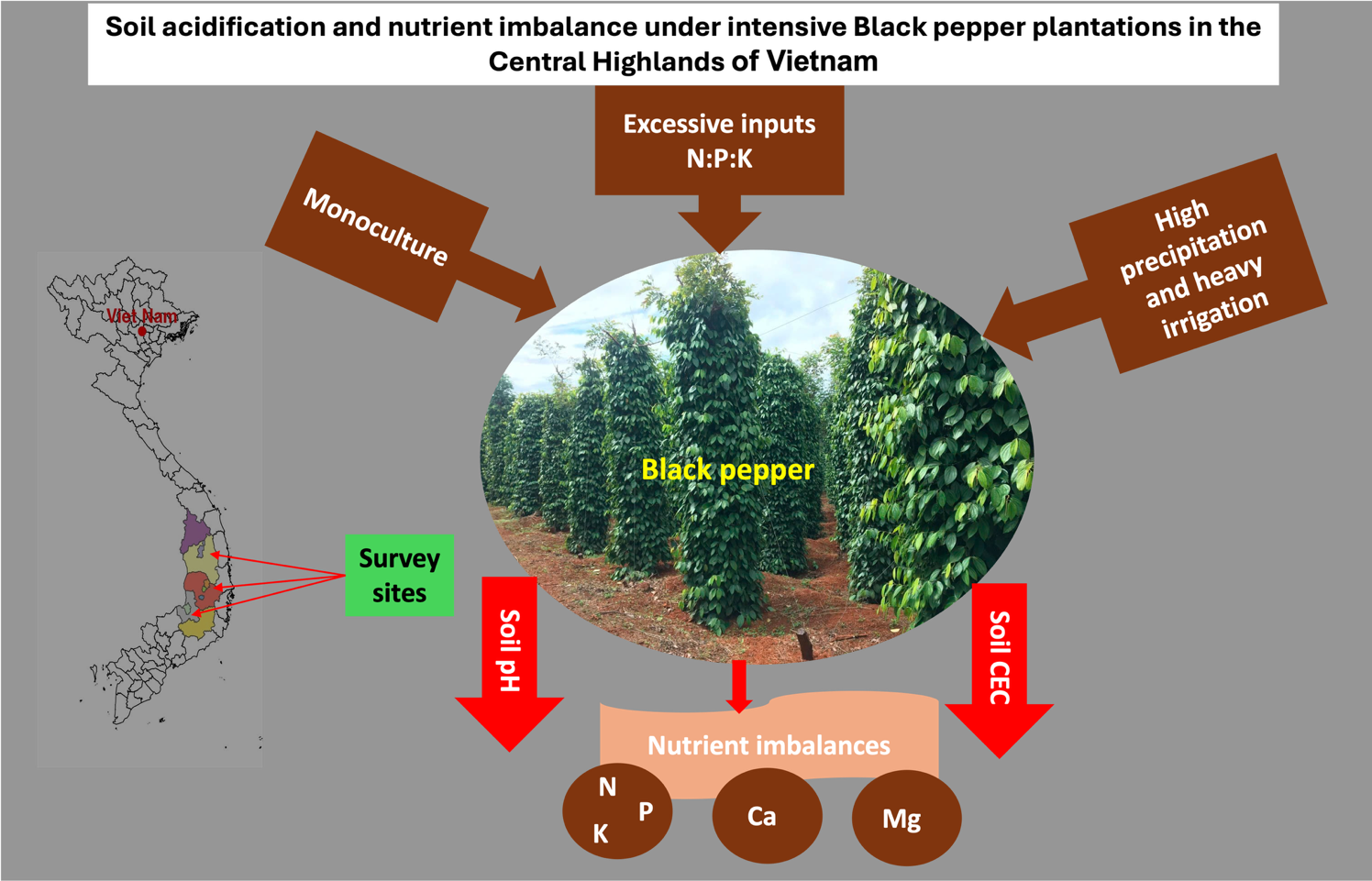
Black pepper is one of Vietnam’s key export crops, largely concentrated in the Central Highlands. In recent years, however, productivity and sustainability of black pepper production systems have been increasingly threatened by soil degradation and rising pressure from soilborne pests and diseases.
A study conducted by the Pepper Research and Development Center, Western Highlands Agriculture and Forestry Science Institute (WASI) in 2023, surveyed 150 intensive black pepper plantations across Dak Lak, Dak Nong, and Gia Lai provinces to assess soil acidification and nutrient balance under long-term intensive cultivation. The results identified three major constraints to sustainable production: (i) strong to very strong soil acidity (pH 3.55–6.40), (ii) low cation exchange capacity (CEC), and (iii) pronounced nutrient imbalances.
More than 80% of soil samples showed excessive phosphorus accumulation (>96 mg P/kg soil), while potassium deficiency was widespread, particularly in Dak Lak (57.6%) and Gia Lai (48%). Calcium (365-978 mg Ca/kg soil) and magnesium (108-161 mg Ca/kg soil) levels varied considerably across provinces, resulting in imbalanced nutrient ratios in many plantations. Correlation and principal component analyses highlighted soil pH and organic matter as the key factors regulating nutrient availability and retention. Spatially, Dak Lak exhibited the most severe soil acidification and CEC depletion; Dak Nong showed relatively stable soil fertility; and Gia Lai soils had higher nutrient levels but greater variability among farms.
These constraints not only reduce fertilizer-use efficiency but also weaken root systems and create favorable conditions for soilborne diseases such as Phytophthora, Fusarium, and plant-parasitic nematodes. The study recommends prioritizing correction of soil acidity, improving soil buffering capacity, and adopting balanced, soil-test–based nutrient management to restore soil health and ensure the long-term sustainability of black pepper production in the Central Highlands.
Author: Nguyễn Văn Long Phone: 0935 493 127 Mail: vanlongpleiku@gmail.com
Download: https://smujo.id/aja/article/view/23725