








Abstract
PhD. Nguyen Van Long
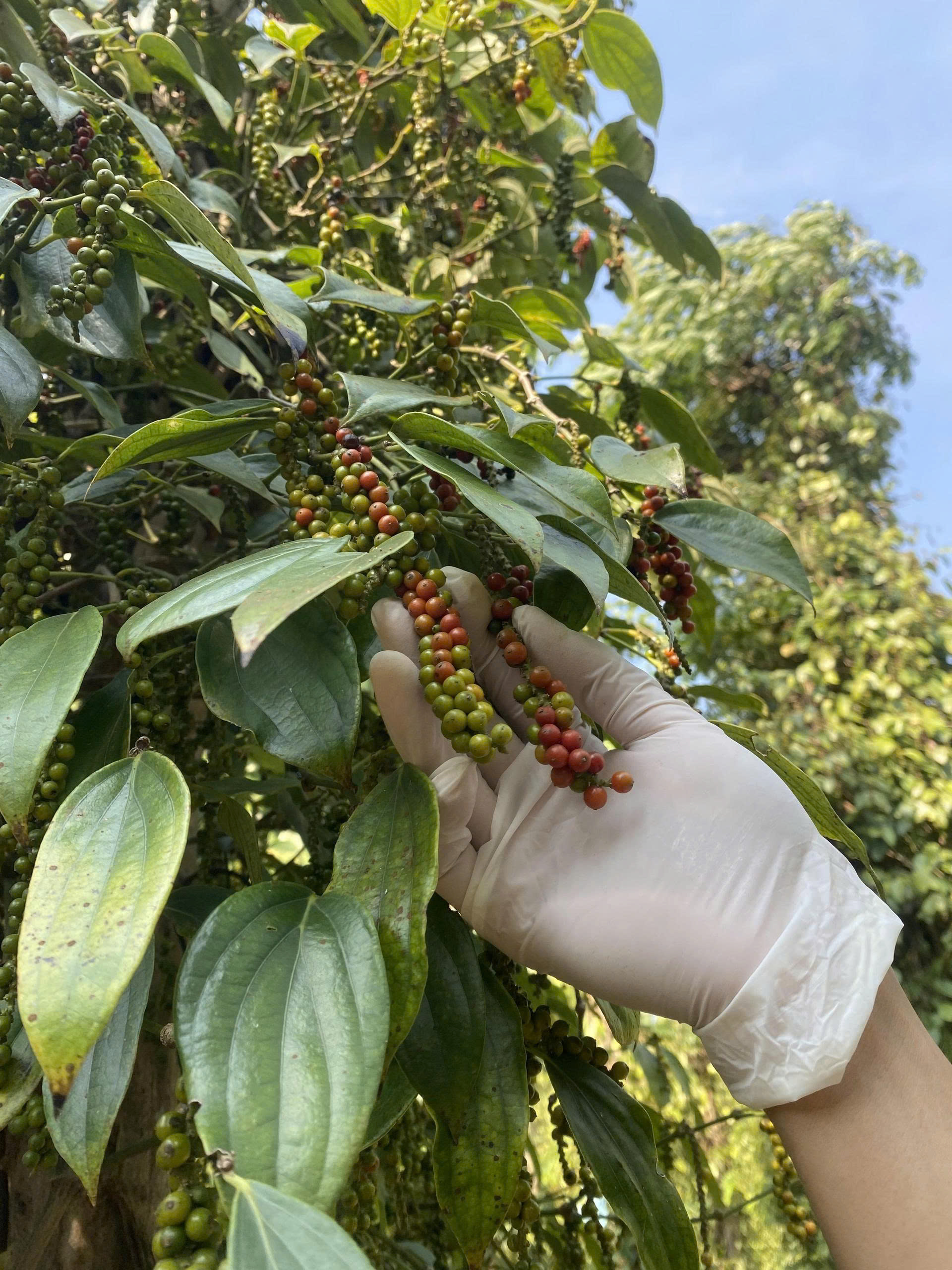
Determining the harvest stage is one of important factors that directly affect the yield and quality of black pepper. The experiment investigated the effect of harvesting ripe levels of pepper fruits on quality in Gia Lai and Dak Lak provinces, including 5 treatments: CT1 (the number of ripe fruits/spike > 75%), CT2 (the number of ripe fruits/spike > 50%), CT3 (the number of ripe fruits/spike > 25%), CT4 (the number of ripe fruits/spike > 5%), CT5 (the number of ripe fruits/spike < 5%). The results showed that the levels of ripe fruits affect both the physical (percentage of firmness, ratio of fresh fruits to peppercorn and weight of 1,000 peppercorns) and chemical characteristics (piperine, volatile oil and ete) of peppercorns. The physical parameters increased gradually as ripeness levels increased and there was a statistically significant difference between the treatments (P < 0.05); however, the chemical compositions of peppercorns decreased. To achieve the highest chemical contents of peppercorn, harvesting should be done when the ripe fruits/spikes are less than 5%. On the other hand, harvesting should be done when ripe fruits/spike is over 75% to achieve the best physical parameters, fitness, and appearance of peppercorns. The study has provided scientific evidence related to changes in peppercorn’s physical and chemical properties caused by different ripeness levels, helping producers choose appropriate harvest stages to meet various product quality and yield requirements.
Contact author: Nguyen Van Long, Mail: vanlongpleiku@gmail.com
Article download address: